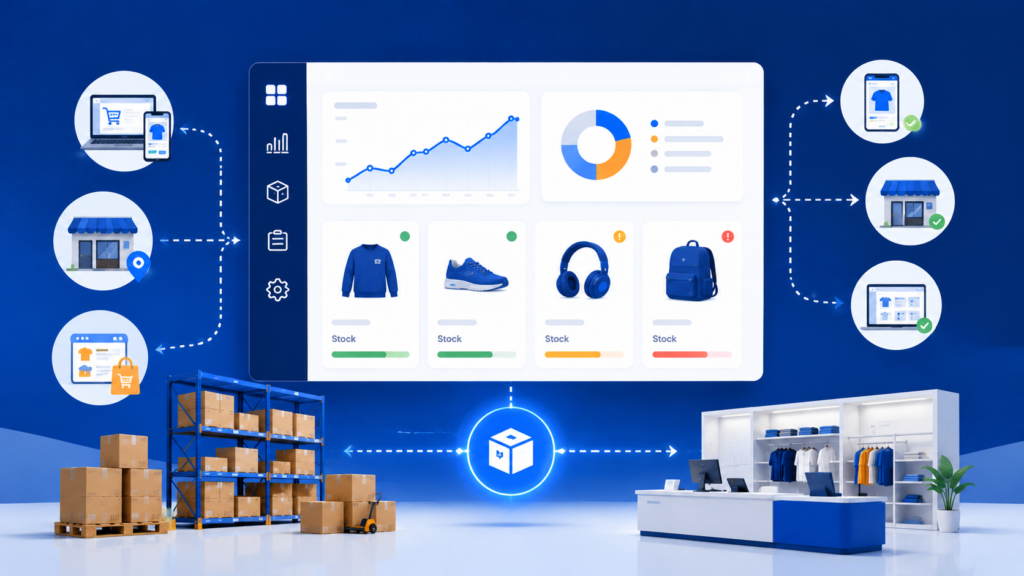
Inventory challenges is a topic that matters enormously to b2b distribution businesses. Whether you are managing stock across multiple warehouses, coordinating with dozens of suppliers, or trying to keep inventory levels accurate across multiple sales channels, the decisions you make about how you manage inventory have a direct impact on your customer relationships, your cash flow, and your ability to grow.
This article covers the essentials clearly, helping you understand the issue and think through what a more effective approach looks like.
Why This Matters for B2B Distribution Businesses
The operational reality of b2b distribution businesses means that inventory errors have consequences that ripple quickly. An inaccurate stock level leads to an oversold product. An oversold product leads to a failed fulfilment. A failed fulfilment leads to a frustrated customer. And a frustrated customer in a B2B context often means a lost account, not just a one-time complaint.
Understanding inventory challenges deeply – not just in the abstract, but in the specific context of how your business type operates – is what separates businesses that manage these challenges proactively from those that manage them reactively.
The Scale of the Problem
Most b2b distribution businesses underestimate how much inventory inaccuracy is costing them until they measure it directly. Research from supply chain analysts consistently shows that businesses without real-time inventory visibility experience significantly higher stockout rates, higher carrying costs from overstock, and lower customer satisfaction scores than those with modern, integrated inventory systems.
What Good Looks Like in 2026
In 2026, best-practice inventory challenges for b2b distribution businesses means real-time data across all stock locations, automated processes for reordering and alerting, seamless integration between inventory data and the other systems the business relies on, and the ability to make confident decisions based on accurate information rather than best guesses.
Common Approaches and Their Limitations
Spreadsheets and Manual Tracking
Most businesses start with spreadsheets. They are free, flexible, and familiar. But as soon as your inventory spans multiple locations, multiple channels, or dozens of SKUs, spreadsheets become a liability. Updates lag behind reality. Multiple versions create confusion. Errors compound. And there is no integration with your other systems.
Basic Standalone Software
Many businesses graduate to basic inventory apps that solve the most pressing spreadsheet problems but introduce new limitations. They often lack the integration depth needed to connect with your suppliers, your sales channels, and your accounting software. And they frequently do not scale well as the business grows.
Integrated Inventory Management Platforms
Modern platforms like Eagle Inventory are designed specifically for the complexity that b2b distribution businesses face. They provide real-time data, automation, and deep integrations – giving businesses the visibility and control they need to operate efficiently and scale confidently.
How Eagle Inventory Addresses Common Inventory Challenges Facing Wholesale Distributors
Eagle Inventory’s platform is built for the operational realities of b2b distribution businesses. Our real-time inventory engine, automated reorder management, and native integrations with leading suppliers, marketplaces, and business platforms give you the control you need without the complexity of enterprise-grade systems.
Frequently Asked Questions
Inventory challenges involves the processes and systems that businesses use to track, manage, and optimise their stock levels. For b2b distribution businesses, this includes managing data from multiple sources, maintaining real-time accuracy, and integrating inventory data with other core business systems.
B2B Distribution businesses typically manage higher complexity than average – more SKUs, more locations, more suppliers, or more sales channels. Each additional layer of complexity multiplies the risk of errors if the underlying inventory system cannot keep pace.
Eagle Inventory provides real-time inventory visibility, automated reorder management, and integrations with the platforms b2b distribution businesses use – addressing the specific operational challenges of your business type.
Ready to see how Eagle Inventory addresses inventory challenges for your business? Book a free demo today.